
 EN
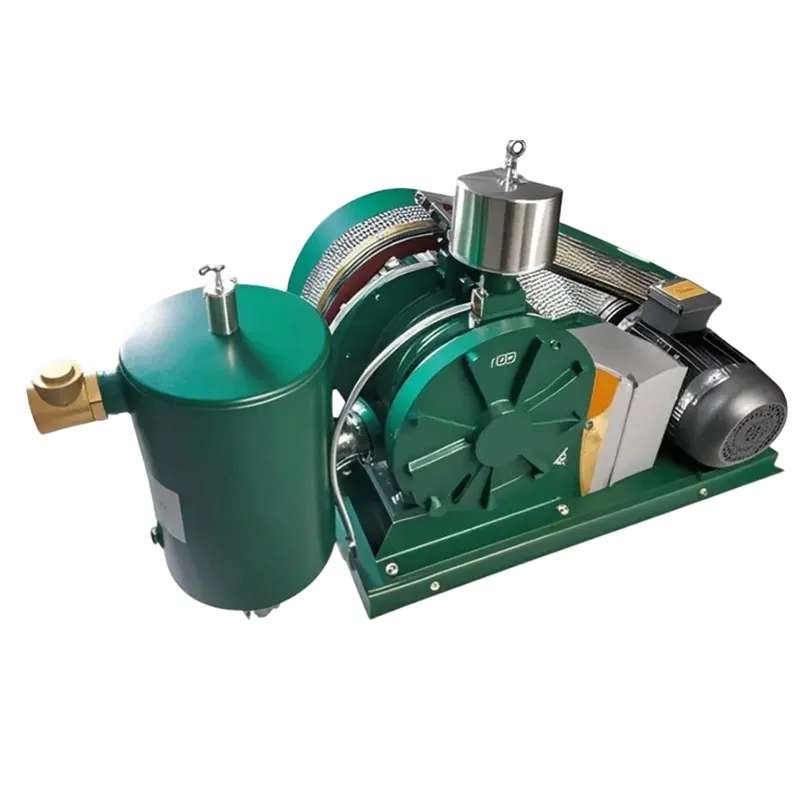
A positive displacement blower operates on a fundamentally different principle than centrifugal fans, ensuring that air flow remains consistent regardless of system pressure changes. Unlike centrifugal designs that rely on spinning impellers to accelerate air radially outward, positive displacement blowers trap a fixed volume of air and mechanically push it through the discharge port with each rotational cycle. This mechanical action guarantees that every rotation delivers a predetermined quantity of air, making these blowers essential in applications requiring reliable, uninterrupted flow rates.
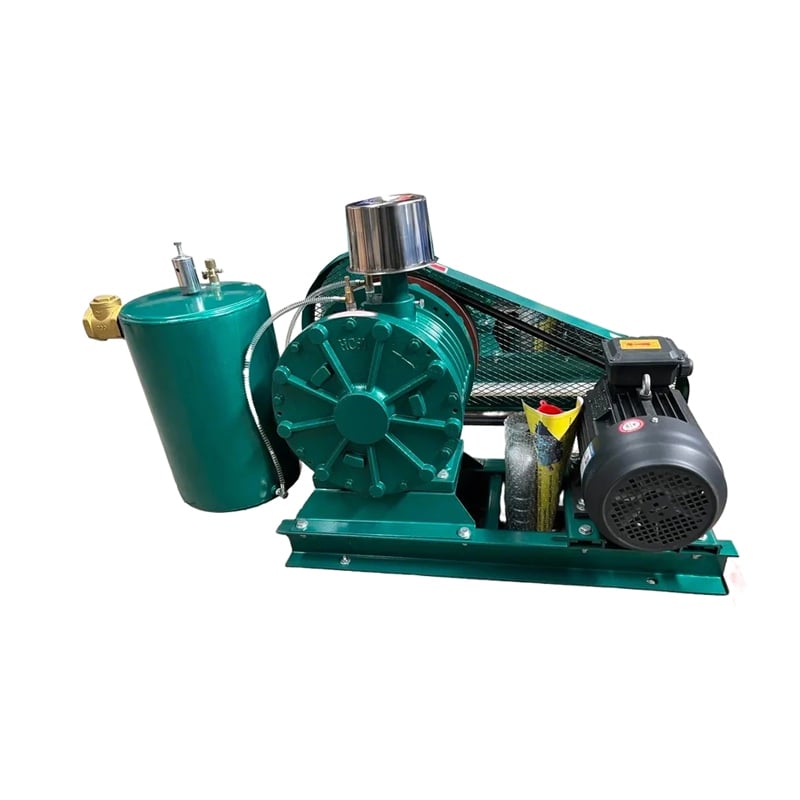
Understanding how a positive displacement blower maintains constant air flow is critical for engineers, facility managers, and procurement specialists who need reliable aeration, pneumatic conveying, or pressure systems. The constant flow characteristic of positive displacement technology eliminates flow fluctuations that plague centrifugal alternatives, providing predictable performance across varying load conditions and extending equipment lifespan in demanding industrial environments.
Internal Mechanics of Positive Displacement Blowers
Fixed Volume Displacement Principle
The core principle enabling a positive displacement blower to maintain constant air flow lies in its fixed volume displacement mechanism. Inside the blower housing, rotating elements such as lobes, screws, or vanes compress and displace air at a predetermined rate with each complete rotation. When the blower rotates at a constant speed, it displaces the same volume of air repeatedly, creating a direct relationship between rotational speed and flow output. This mechanical certainty contrasts sharply with centrifugal fans, where flow rate depends on speed, pressure resistance, and air density, introducing variability into the system.
Synchronized Rotor Design
Positive displacement blowers typically employ synchronized rotors or lobes that mesh together without contacting one another. Two interlocking rotors rotate in opposite directions, each completing one revolution per operating cycle. As the rotors turn, they create expanding and contracting chambers that trap air and force it toward the discharge opening. The synchronized timing ensures that these chambers open and close with precision, eliminating gaps or backflow that would compromise constant air flow. This synchronized design is fundamental to maintaining stable pressure and flow output regardless of downstream resistance.
Pressure Independence and Flow Stability
Constant Flow Regardless of Back-Pressure
One of the defining characteristics of a positive displacement blower is its ability to maintain constant air flow even as system back-pressure increases. When downstream resistance rises—such as when filter media becomes partially clogged or system demand varies—a centrifugal fan would reduce its output flow. A positive displacement blower, however, continues delivering the same volume per revolution because its displacement is mechanically fixed, not aerodynamically dependent. The blower motor must work harder to overcome the additional pressure, but the actual flow rate remains consistent, making it ideal for applications where uninterrupted air supply is critical.
Flow Regulation and Speed Control
While a positive displacement blower naturally maintains constant flow at a given rotational speed, engineers can achieve variable flow output by adjusting the blower's motor speed through variable frequency drives or mechanical governors. This allows operators to modulate air flow according to process requirements without losing the fundamental advantage of constant displacement per rotation. The ability to scale output while preserving the constant flow characteristic per rotation speed makes positive displacement technology exceptionally versatile for industrial applications ranging from wastewater aeration to pneumatic conveying systems.
Industrial Applications Benefiting from Constant Air Flow
Wastewater Treatment and Aeration
Wastewater treatment facilities depend on positive displacement blowers to maintain consistent oxygen diffusion into treatment tanks. Biological processes require stable dissolved oxygen levels to function efficiently, and the constant air flow delivered by positive displacement blowers ensures that aeration basins receive uniform oxygen supply. Any fluctuation in air flow could compromise treatment efficiency and regulatory compliance, making the reliable performance of a positive displacement blower essential to meeting environmental standards and operational targets.
Pneumatic Conveying and Industrial Processing
Industries using pneumatic conveying systems—such as cement, flour milling, and powder handling—rely on positive displacement blowers to maintain consistent material transport velocity. The constant air flow ensures uniform particle acceleration and prevention of bridging or segregation within conveyor lines. Similarly, in vacuum and pressure applications, a positive displacement blower provides dependable air supply for Pick-and-place systems, vacuum packaging, and industrial pressing operations where flow consistency directly impacts product quality and production rates.
Maintenance Considerations and Performance Longevity
Preventive Maintenance Strategies
Because positive displacement blowers operate at fixed displacement rates regardless of system conditions, they experience predictable stress patterns that enable precise preventive maintenance planning. Regular inspection of rotor clearances, bearing conditions, and seal integrity ensures continued constant air flow performance. Unlike centrifugal fans that may operate across a wider range of conditions, positive displacement blowers benefit from standardized maintenance intervals because their operating envelope remains more consistent. Proper lubrication, timely filter changes, and monitoring of motor performance directly preserve the constant flow characteristics that users depend on.
Long-Term Reliability and System Integration
The mechanical simplicity of positive displacement technology contributes to extended equipment life and reduced downtime. Because constant air flow is guaranteed by design rather than by aerodynamic optimization, the blower performs reliably across seasonal variations, altitude differences, and humidity fluctuations that would affect centrifugal alternatives. This inherent stability makes positive displacement blowers cost-effective over their operational lifespan when the true cost of ownership—including reliability, maintenance, and energy efficiency at constant flow—is properly evaluated against competing technologies.
FAQ
What determines how much air flow a positive displacement blower delivers?
The air flow output of a positive displacement blower is determined by two factors: the displacement volume per rotation and the rotational speed. A fixed positive displacement blower with a displacement of 100 cubic feet per rotation, operating at 1,000 rotations per minute, will deliver approximately 100,000 cubic feet per minute regardless of downstream pressure. Changing the motor speed through variable frequency drives allows operators to adjust output while maintaining the constant flow principle.
How does a positive displacement blower handle system pressure spikes?
When a positive displacement blower encounters a system pressure spike, the blower continues delivering its fixed volume of air per rotation because the displacement is mechanically determined. The motor draws additional electrical current to overcome the increased pressure resistance, but the actual flow rate remains constant. This consistent performance is exactly why positive displacement technology is preferred in applications where stable air supply is non-negotiable and pressure conditions may vary unpredictably during operation.
Can positive displacement blowers be used in variable flow applications?
Yes, positive displacement blowers can be adapted for variable flow applications by installing variable frequency drives or adjustable speed couplings that modulate rotational speed. By reducing or increasing motor speed, operators can proportionally adjust the air flow output while preserving the constant displacement advantage at any given speed. This flexibility allows a single positive displacement blower to serve multiple operational scenarios without sacrificing the reliability and predictability that make this technology attractive for industrial use.