
 EN
EN
Selecting the right positive displacement blowers for new equipment designs requires careful evaluation of multiple technical and operational factors. Equipment manufacturers must balance performance requirements, efficiency goals, noise considerations, and long-term reliability to make informed decisions. The choice of blower technology directly impacts product performance, energy consumption, maintenance costs, and customer satisfaction. Understanding the capabilities and limitations of positive displacement blower selection guide methodologies helps engineers design systems that meet both current needs and future scalability demands.
The selection process begins with understanding how rotary lobe blower applications align with your specific system requirements. Different industrial environments demand different blower characteristics, from wastewater treatment facilities to pneumatic conveying systems and medical device applications. Manufacturers must evaluate flow rates, pressure capabilities, operating temperatures, and material compatibility before making final recommendations. A comprehensive positive displacement blower selection guide ensures that chosen designs deliver reliable performance across their entire operational lifespan while maintaining cost-effectiveness.
Understanding Positive Displacement Blower Technology
Core Operating Principles
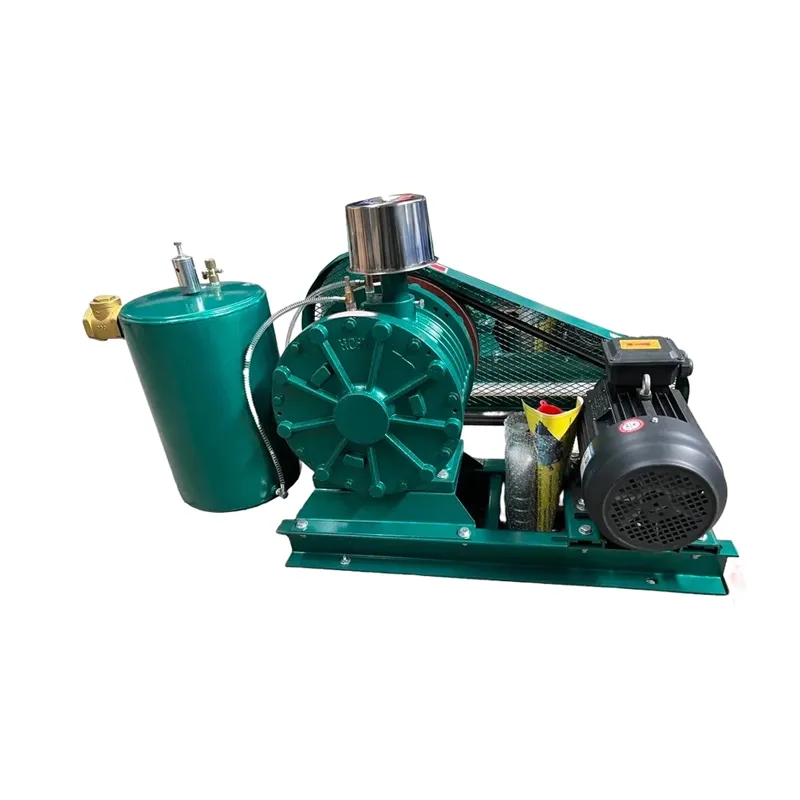
Positive displacement blowers operate by trapping and moving fixed volumes of gas with each rotational cycle. Unlike centrifugal blowers that accelerate gas, these units provide consistent flow rates regardless of downstream pressure variations. This characteristic makes them ideal for applications requiring stable air or gas delivery. The rotary lobe blower applications span across industries because this dependable volumetric displacement approach works consistently across diverse operating conditions.
Key Performance Characteristics
When evaluating positive displacement blower selection guide criteria, manufacturers should prioritize volumetric flow rate capacity measured in cubic feet per minute or cubic meters per hour. Pressure ratings determine whether the blower handles low-pressure applications like aeration or high-pressure pneumatic conveying tasks. Displacement volume per revolution directly correlates with efficiency and determines the physical size and speed required for target performance. Understanding these specifications helps equipment designers match blower capabilities to their system demands without over-sizing or under-sizing components.
Critical Selection Factors for Equipment Manufacturers
Flow Rate and Pressure Requirements
Accurate flow and pressure calculations form the foundation of effective positive displacement blower selection guide development. Engineers must account for peak demand scenarios, system resistance, and future expansion possibilities. Flow requirements fluctuate based on process parameters, ambient conditions, and load variations throughout operational cycles. Rotary lobe blower applications benefit from this technology because it maintains consistent delivery even when downstream conditions change. Manufacturers should apply safety margins typically ranging from 10 to 20 percent above calculated requirements to ensure reliable operation during peak demands.
Material and Temperature Compatibility
Equipment designs must specify materials that withstand the gases or air being conveyed and operating temperatures encountered. Positive displacement blowers handling corrosive gases, high-temperature streams, or special process fluids require specialized construction. Rotor materials, bearing types, and sealing systems must match application requirements to prevent premature failure. Temperature considerations affect lubrication viscosity, thermal expansion, and component lifespan. A thorough positive displacement blower selection guide incorporates material compatibility evaluation as a non-negotiable design step.
Addressing Noise and Vibration Concerns
Industrial Blower Noise Reduction Strategies
Industrial blower noise reduction remains a primary concern for equipment manufacturers designing systems deployed in occupied facilities or noise-sensitive environments. Positive displacement blowers generate noise through several mechanisms including inlet air pulsation, discharge pressure fluctuations, and mechanical vibration transmission. Selecting blowers with optimized lobe timing and geometry reduces pulsation-induced noise at the source. Rubber isolation mounts, vibration dampers, and flexible coupling systems minimize mechanical transmission to surrounding equipment and structures. Sound enclosures and lined intake ducts provide additional industrial blower noise reduction when space and budget permit.
Efficiency and Energy Consumption
Positive displacement blower selection guide methodologies must include efficiency analysis since energy costs accumulate significantly over equipment lifespan. Higher efficiency units consume less power while delivering required performance, resulting in reduced operating expenses and lower environmental impact. Rotary lobe blower applications benefit from improvements in rotor design, bearing technology, and mechanical tolerances that enhance efficiency without compromising reliability. Equipment manufacturers should compare specific power consumption metrics across candidate blowers to identify optimal cost-performance balance. Lifecycle cost analysis incorporating energy expenses often reveals that premium-efficiency positive displacement blowers deliver superior financial returns despite higher initial investment.
FAQ
What distinguishes positive displacement blowers from other blower types?
Positive displacement blowers deliver fixed volumes of gas per revolution regardless of downstream pressure, while centrifugal blowers accelerate gas and depend on downstream resistance to generate pressure. This fundamental difference makes positive displacement blowers ideal for applications requiring stable flow rates and consistent pressure delivery even under variable operating conditions.
How do rotary lobe blower applications differ across industries?
Rotary lobe blower applications range from wastewater treatment aeration and pneumatic conveying to food processing and medical device manufacturing. Each industry requires different material compatibility, pressure ratings, and noise specifications, making the positive displacement blower selection guide process highly application-specific.
What role does industrial blower noise reduction play in equipment design?
Industrial blower noise reduction affects equipment deployment feasibility, regulatory compliance, and workplace conditions. Incorporating noise reduction strategies during the design phase through blower selection, vibration isolation, and acoustic treatments prevents costly retrofits and ensures systems operate within acceptable noise limits.